The Autumn They Leave Behind
FIELD NOTE #002
Where: Värmland, Sweden
Season: Autumn
Time in the field: Two seasons
Observation: As the tourist season ends, the landscape enters one of its most abundant seasons.
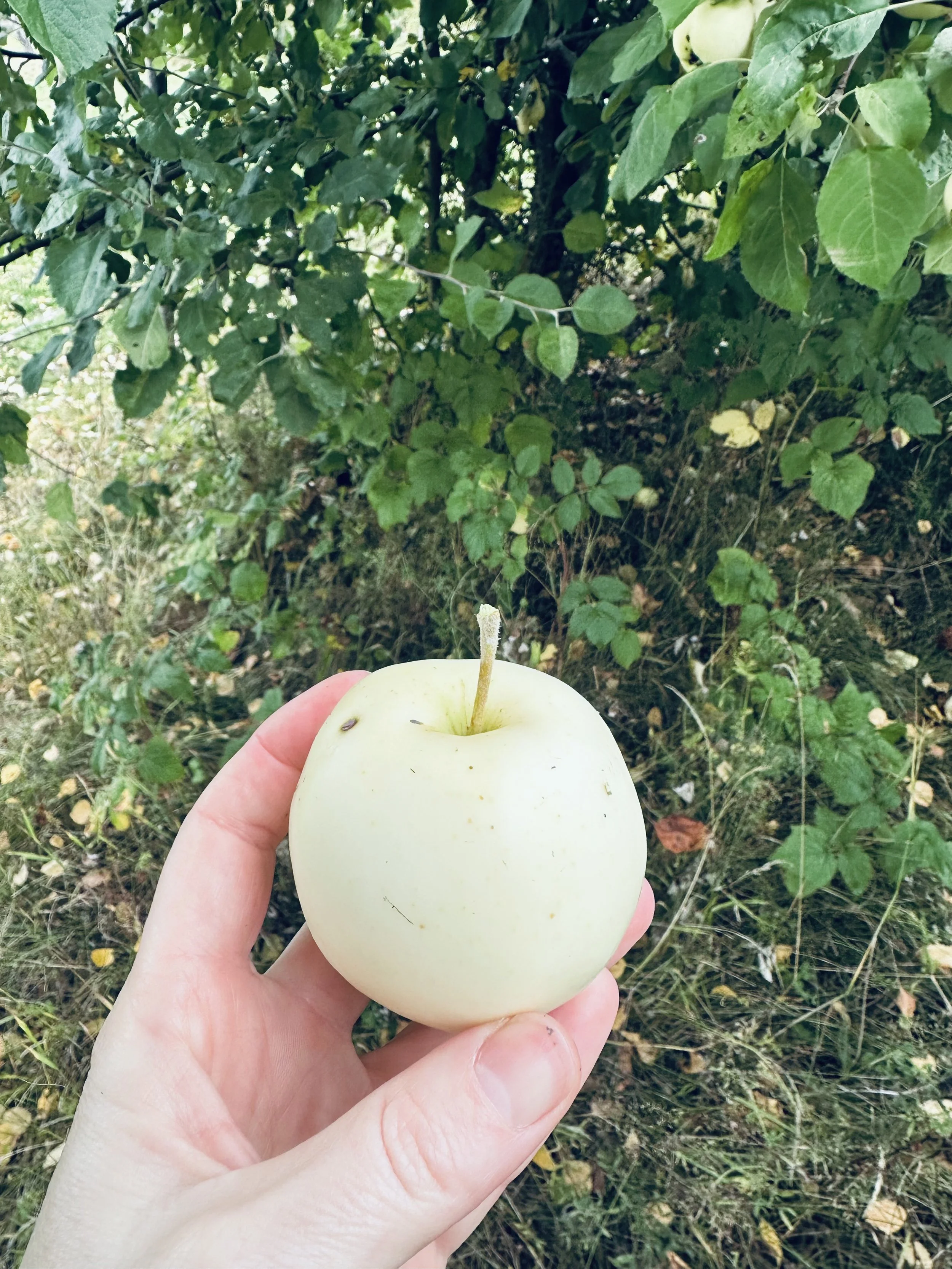
Vitt Klaräpple… hmm, could be.
Or maybe a Viksäpple.
I take a close-up picture of the apple’s skin. I’ve never seen an apple this white. It’s so pale, almost porcelain-like. And it’s quite big too. A real handful.
I take a bite. Hmm… juicy. Not too sweet, with just a little acidity. Delicious. Even the skin isn’t too tart.
I pick a few more apples and put them in my bag. I decide to look into it a bit more when I get back to the house.
We’ve been in Södra Fjäll for over a week now. It’s a tiny village near Arvika, in Värmland.
We spent the summer closer to town, in a little cottage belonging to a friend. Hidden away on a tiny hill surrounded by trees in the middle of farmland. They call it the island.
This autumn, we’re staying in an old, renovated timber house. It’s absolutely lovely. Views of the hills and fields, a glimpse of Lake Billingen. Forest on one side, farmland on the other. Huge bulls grazing just in front of the house.
These last few days, I’ve found myself outside for hours. Just wandering around. Discovering the remains of old orchards, tasting the different fruits I come across and trying to figure out whether I’ve finally found mushrooms that are edible.
When I went out the other day to pick some apples, I found a treasure.
Wild plums!
They look like rather large red grapes, with that same dusty red skin. And the taste! Sweet, sour, with a fleshy texture. A little taste explosion in your mouth.
Karim and I just sat around the table, putting one little plum after another into our mouths, making appreciative noises and giving each one our full attention.
Hmm, hmmmm… oh my goodness, this is so good.
We decide to keep a third for snacking and use the rest to bake something. I start looking online for a recipe that would honour the plums. Nothing too complicated. A simple almond frangipane.
I have to giggle when I catch myself feeling some pressure to get it exactly right. What a waste of these beautiful plums it would be if I messed it up.
While the pie is in the oven, I decide to look into the pale apple again. Since I can’t find an answer based on the apple itself, I dig a little deeper into the history of the place where I found it.
The family we’re renting the house from has been coming here for generations. The grandfather and his brother inherited a house up the road from their parents. Over the years, they acquired more properties in Södra Fjäll.
When we moved in, part of the family was here, harvesting apples and honey before preparing the bees for winter.
One of the daughters told me that the bees had belonged to her mother, who passed away a few years ago. Before she died, she gave some of her bees to a woman in the next village. In return, this woman now helps the family care for the bees, teaching them how to harvest honey and look after the colonies.
That day, it was the daughters and granddaughters tending to the bees.
Four generations and counting. This is where they gather. Spend time together. Away from their everyday lives in Stockholm. Busier lives, I imagine.
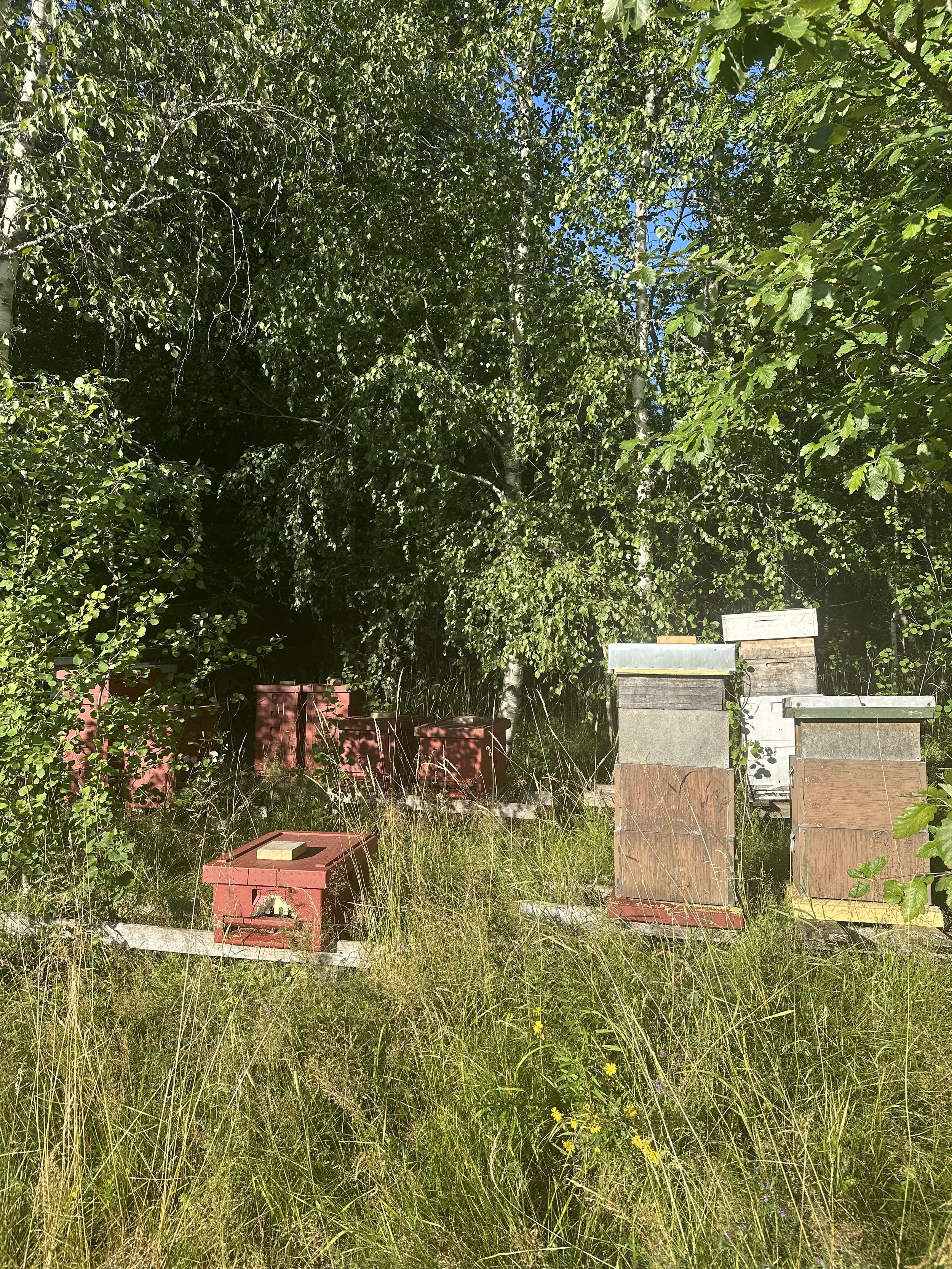
Södra Fjäll was once farmland, with orchards scattered across the area. Over time, some of the land became forest, while other parts were divided into smaller properties. Many are now used as holiday homes, standing empty for much of the year.
After scrolling for a while, I’ve learned more about the area and the people connected to it, but still haven’t found any clues about the mysterious pale apple.
I did, however, come across an interesting lead.
Värmlands Museum’s Apelgården at von Echstedtska gården is an official local clone archive connected to Sweden’s National Gene Bank. It holds 26 apple varieties originating in or associated with Värmland, and the museum organises an annual autumn apple day where visitors can have their apples identified.
Maybe I’ll go there to find out who this pale beauty is.
I could also just ask the owner, but hey, when else would I end up at an annual apple day at a local museum?
The pie turned out great. No added sugar, not even a drop of honey. Just the taste of the plums and an almond crust. Perfect.
The branches of the plum tree are empty when I pass it while walking Navara later that day. I picked every last one.
I’m not even sure people know it’s here. It’s hidden away.
I decide that before we leave, I might clear some of the vegetation growing around it and remove the rotten tree trunks that seem to be getting in its way.
It’s mid-September. The canoe centre where we’ve been working this summer has just closed its doors for the season. Most tourists have left, driving back south to the Netherlands, Germany and Belgium, or west towards Norway.
They are missing out…
For me, this is one of the most interesting times of the year, especially at these latitudes in the Nordics.
We’re so guided by the calendar. Summer is over, holidays are finished, businesses close their doors. Yet out here, the landscape is entering one of its most abundant seasons.
You can still hike, canoe, fish and camp. Perhaps with a few more challenges, but on top of that, the berries are ripening, mushrooms are popping up and leaves are turning golden and red.
Harvest time.
The smell of fruit in the air. Misty mornings over the fields. Hunting season will start soon.
We have a few weeks off before heading north again, towards winter and the dogs.
So now there’s the luxury of roaming, foraging, cooking and baking.
It reminds me what a beautiful lens food can be for getting to know a place.
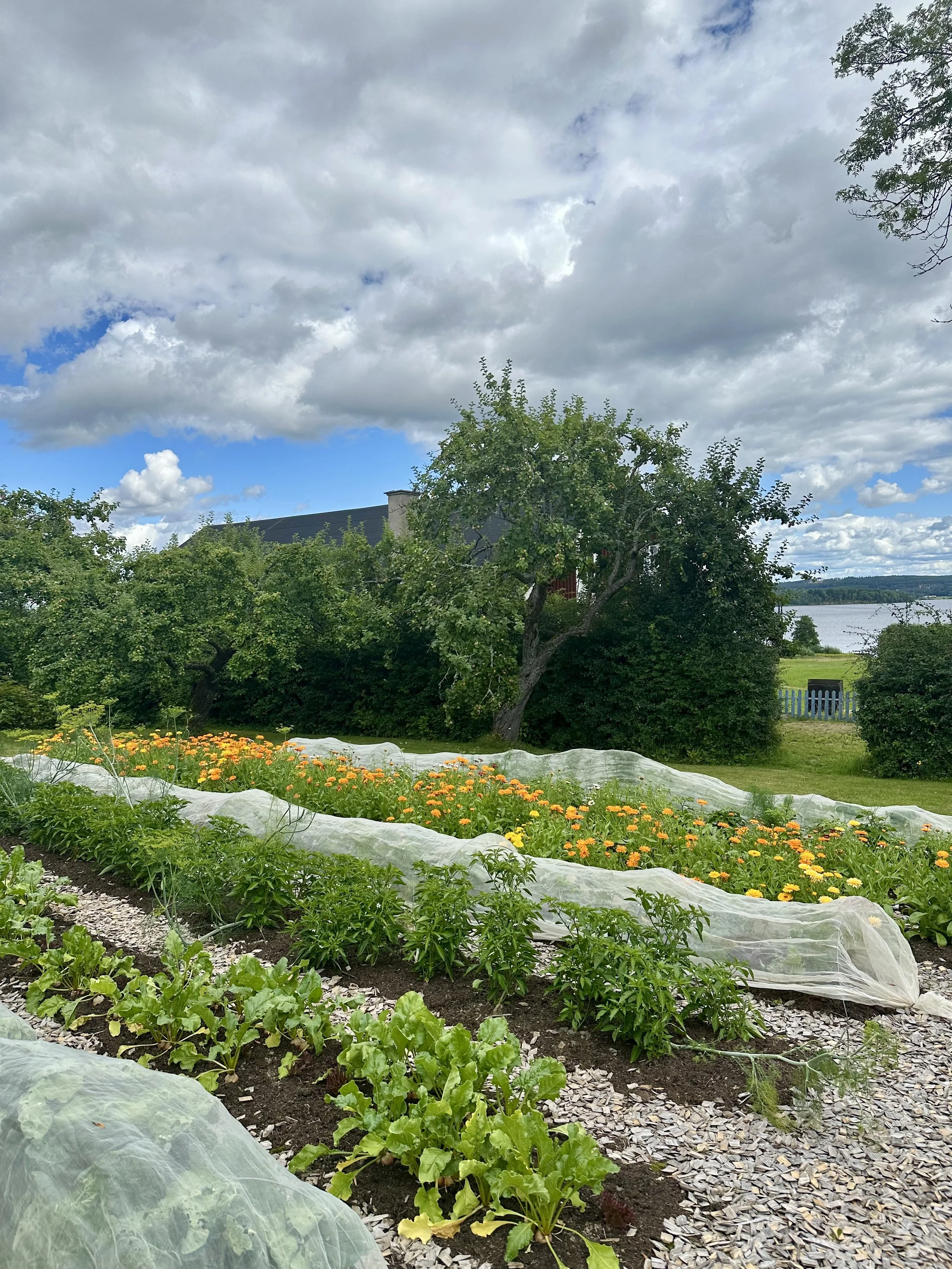
In late July, for Karim’s birthday, we visited Sillegården, where Ridgedale Farm runs a restaurant on Fridays and Saturdays. Much of what ends up on your plate comes straight from the farm. A regenerative farm.
The setting is lovely. A historic building that has been home to a restaurant for many years. Picnic tables outside, overlooking the surrounding fields. A stage where artists perform live music.
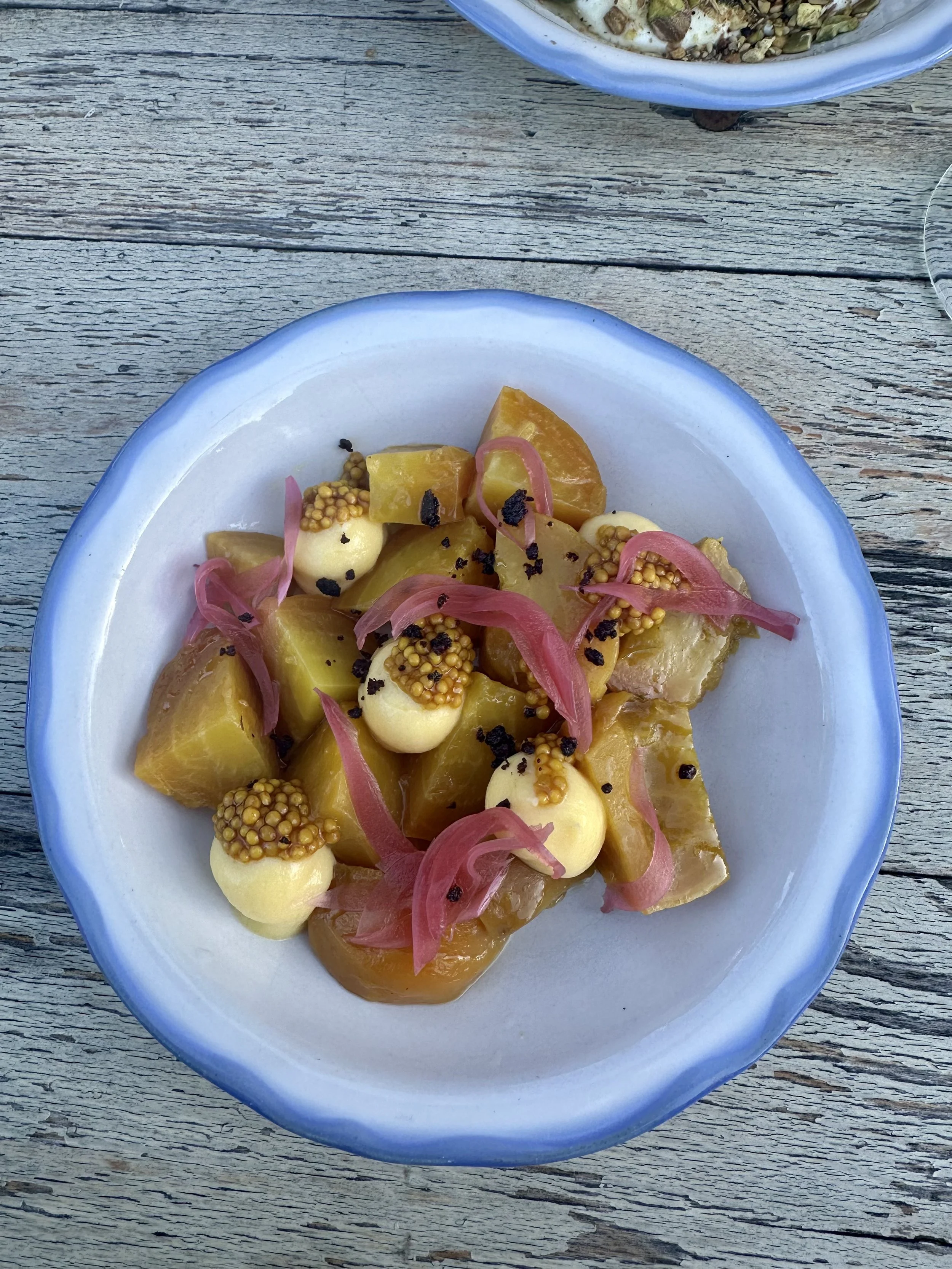
We had a wonderful evening, and the food was amazing. I remember a side dish of golden beetroot. It was so delicious I could easily have eaten a whole plate of it as my main course.
It turns out that the owner of Ridgedale Farm is internationally known for his work in regenerative agriculture. His farm doesn’t just produce food. It also functions as a knowledge hub, attracting people from around the world who come to learn about regenerative farming.
What if people came to Värmland for the food?
Food tourism. I think of France.
Karim and I once went bikepacking along La Voie Bleue, stopping at vineyards along the way for wine tastings.
It’s quite common for vineyards to welcome visitors outside the harvest season. An additional source of income, but also an opportunity to share their passion and way of life with people who are genuinely interested.
I remember one woman in particular.
The room where she welcomed us was filled with old vineyard tools, objects and decorations. Almost like a little museum, with bits and pieces of the vineyard’s history everywhere. She absolutely loved sharing her knowledge and enthusiasm for the wines they produced.
She told us that welcoming visitors provided a valuable source of income outside the harvest season. But it also took a lot of time and effort. Sometimes perhaps a little too much.
Still, she loved having people over, showing them around and sharing their story.
For her, it was worth it.
Or how about a more agricultural kind of tourism?
Old cottages and barns converted into holiday accommodation. Waking up with grazing cows just outside your window.
Farms offering workshops in food preservation or cooking. Or farm stays where you take part in everyday life. Feeding animals, cleaning out stables, getting your hands dirty.
Then there’s Workaway, where travellers spend longer periods living and working alongside local people in exchange for food and accommodation.
I’ve always found this a beautiful way to travel. To experience different places, ways of life and everyday routines from within.
I like the idea of travel becoming more than simply experiencing a place. Of spending enough time somewhere to become part of its everyday rhythm, and perhaps even contributing something in return.
I experienced something like that with the Thórsmörk Trail Volunteers in Iceland.
I spent an entire summer maintaining hiking trails in the same area where I’d previously worked as a hiking guide.
The programme, run by the government agency Land og Skógur, brings together volunteers from around the world to help maintain trails and conserve Iceland’s natural landscapes.
For me, it was the experience of a lifetime. An incredible opportunity to learn, meet people and give something back to a place that had already given me so much.
Back to food.
Värmland also has its share of food markets and events, promoted by local destination organisations.
But food events can be about much more than simply bringing producers and consumers together.
I came across an interesting study from 2026 looking at local food-tourism events and their role in sustainability.¹ The researchers explore how food events might become places for experimenting with circular food systems, supporting local entrepreneurship, strengthening community resilience and even advancing food sovereignty.
I find it interesting to look at food tourism through a regenerative lens. Not just as a way for visitors to discover local food, but as something that could potentially contribute to the systems and communities behind it.
It makes me think of REKO-ring, an alternative food system that originated in Finland and has since spread across the Nordics.
People buy directly from local farmers and producers. No middlemen. It’s a very practical system.
Producers post what they have available for the upcoming REKO-ring in a Facebook group. People place their orders in advance, often paying through Swish, a Swedish mobile payment service linked to a bank account and Mobile BankID.
Then comes collection day.
Once every two weeks, on a Thursday between 17.00 and 17.30, everyone meets in a large parking lot in town.
Just half an hour.
People arrive, collect their orders and leave. No wandering around market stalls, browsing products or chatting with vendors for hours. Just pick up your food and off you go.
I like the simplicity of it. A system built around local producers and the people who buy from them. Short supply chains, direct relationships, and more of the money going to those producing the food.
To me, there’s something regenerative about that. A system that supports the local food economy, built around the needs of the people who live here.
What would it look like if tourists had access to this?
Would it simply turn into another farmers’ market?
Probably…
But would that actually add anything of value?
And to whom?
I decide to ask some of the locals how they feel about tourism in autumn and what it might bring to the area. That in itself is a bit of a challenge. It’s not exactly a natural conversation starter. At least not here in rural Sweden.
I get lucky. In town, I run into our former neighbour from when we stayed at the summer cottage. She grows her own food and keeps bees, selling honey and, depending on the harvest, sometimes vegetables too.
I tell her about our autumn. How the season at the canoe centre has ended, how beautiful everything is at this time of year, and how I feel that all those tourists who have driven off are actually missing out.
She agrees. Especially September.
We talk about her bees, the harvest and whether she’ll be selling at any markets. I wonder aloud what it would be like if tourists were still around at this time of year. Wouldn’t that create more opportunities for local producers like her?
“But now we have the outdoors all to ourselves,” she says, with a somewhat mysterious smile.
A few days later, I run into another neighbour, a farmer who keeps livestock and sells his meat through REKO-ring.
I’m walking Navara along the dirt road when he comes out of the field, where he’s just been feeding his bulls. He comes over to pet her. Hunting season has just started, and he reminds me to put a reflective jacket on Navara and keep her close when we’re out in the forest.
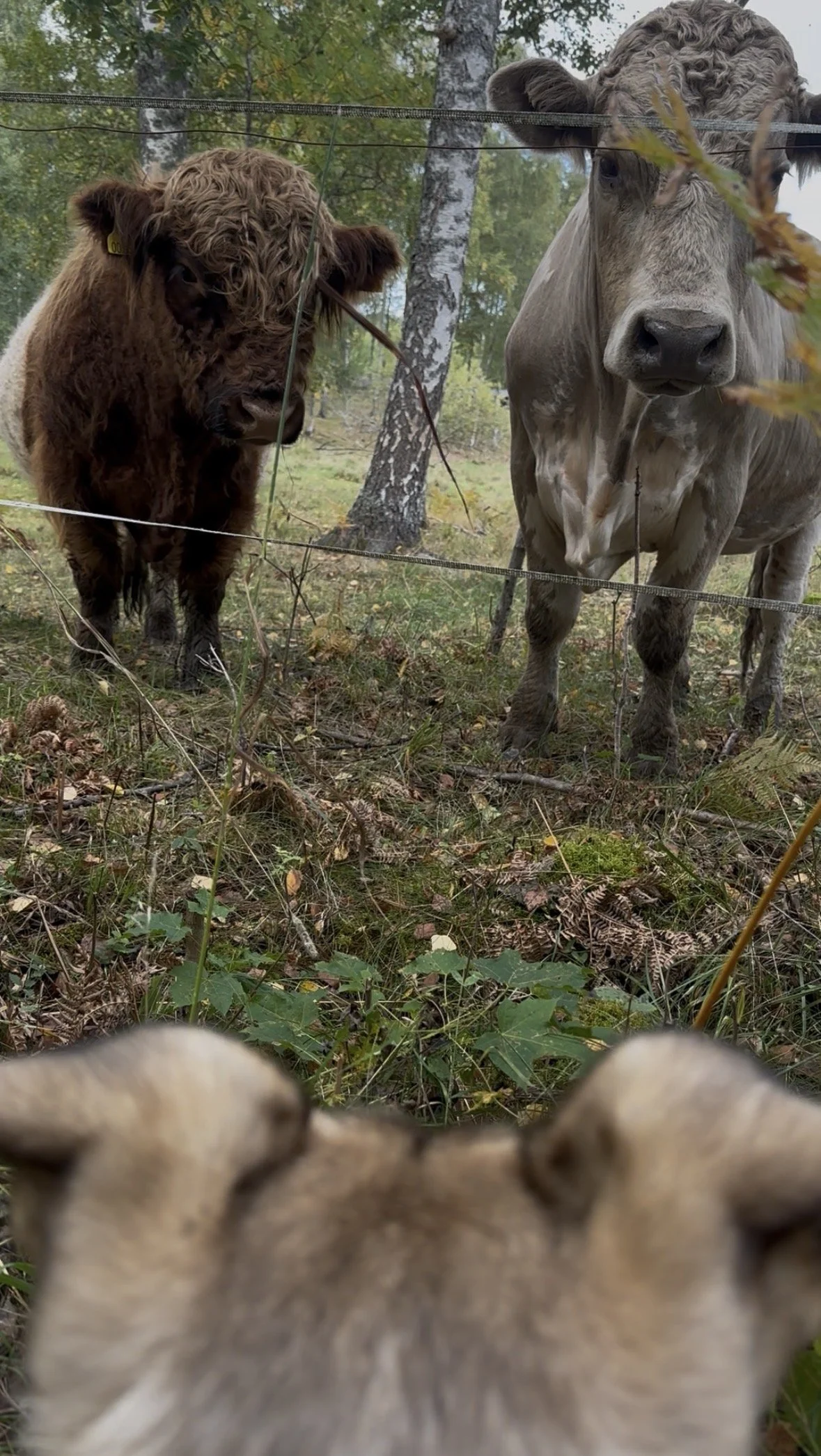
We chat for a while, and somewhere in the conversation, I manage to bring up autumn tourism. What if more people came to Värmland outside the summer season?
“We like Värmland just as it is.”
He gives me a smile, much like the one I received from our former neighbour, before heading back towards his tractor.
“Hej då!”
I’ve been thinking about those conversations.
Neither of them actually said they didn’t want more tourists. Perhaps I was reading too much into their smiles. Perhaps they were simply being polite, or perhaps they didn’t see much reason for things to change.
What struck me was how content they seemed with the rhythm and pace of life here. Something I’ve noticed in many of the people I’ve met over the past months.
I’ve spent the past weeks imagining what autumn tourism could bring to this place. More opportunities for farmers and small producers. A greater appreciation of local food and the seasons. Visitors discovering a side of Värmland they might otherwise never see.
But perhaps what I see as untapped potential, they simply experience as a good life.
I arrived here relatively recently, looking at the landscape with fresh eyes, seeing possibilities. They live and work here. They know the seasons, the people, the land. And perhaps they see something entirely different when they look at this place.
To me, regeneration is about strengthening the ability of a place to thrive over time. Its people, its local economy, its land and the nature that sustains it all.
Perhaps that could mean finding ways for visitors to participate in existing local food systems without disrupting them. Buying directly from producers, supporting the people who work the land, contributing economically to an ecosystem that is already there.
But does that automatically make tourism regenerative?
There are also things that can’t be measured in economic terms. The quiet, the space, the rhythm of the seasons.
Creating value sounds wonderful. But who decides what is valuable? What I see as an opportunity might not be what someone living here needs or wants. And perhaps we can’t really know what would add value to a place without first understanding what the people who live there, and the land itself, already have and need.
Perhaps regeneration is as much about recognising what is already working and what is worth protecting as it is about finding ways to contribute.
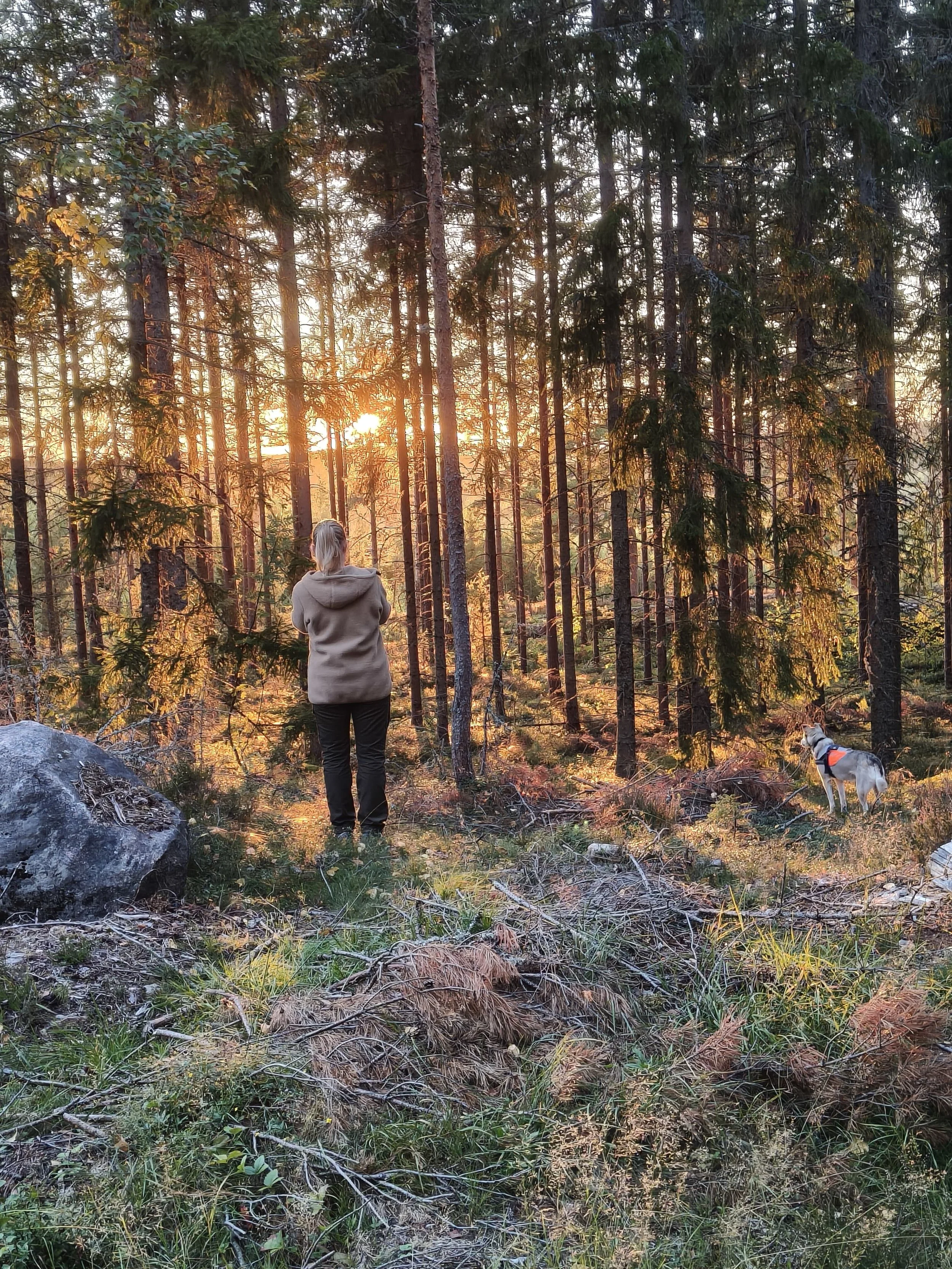
A few days later, I’m walking Navara along the little dirt road when we stumble upon three deer. One noticeably smaller than the others. They’re standing beneath an apple tree in one of the gardens along the road.
Eating the apples scattered on the ground.
We all seem equally surprised. Me, Navara and the three deer.
For a moment, nobody moves. We just stand there, looking at each other, waiting to see who’s going to make the first move.
Then a gust of wind sends another apple falling from the tree.
The deer sprint off.
Navara and I stand there for another moment, looking at the empty space beneath the apple tree.
¹ Orea-Giner, A., Fusté-Forné, F., Todd, L., & Park, E. (2026). The nexus between local food tourism events and social sustainability: Future prospects and priorities. Tourism Management Perspectives, 60, Article 101430. https://doi.org/10.1016/j.tmp.2025.101430